Category Archives: Economics

Was Removing the DEA the Catalyst for Bolivia and Latin America’s Economic Miracle?

9/11/2013 Portland, Oregon – Pop in your mints…

We recently returned from Bolivia, which, for the geographically challenged, is a relatively large country located in the heart of South America.  Our better half hails from this land that extends from the peaks of the Andes to the Amazon basin, and we have more than a passing interest in the goings on there.

What we observed in Bolivia this past trip can only be described as an economic boom.  While the economy has been on the uptick for a number of years, what we saw this year was well beyond an uptick.  During previous visits, we witnessed the construction of major roads along with an insane number of apartment complexes being constructed.  On this trip it was evident that the parks are now being maintained and the number of western style shopping malls and other spaces had greatly increased.

The homogenization of Bolivia, as we are fond of calling the phenomenon of globalization, is well underway.

Indeed, as one toggles the GDP of Bolivia on the embedded chart below, courtesy of tradingeconomics.com, the warp curve of economic growth that we have observed in our travels there, which began in 2005, just before Evo Morales (whose policies can only be described as Neo-Socialist) was elected, is confirmed by GDP figures.


Source: tradingeconomics.com

As we descended into Viru Viru, the interestingly named airport in Santa Cruz, we struck up a conversation with a young man who was working as a commercial diver in Oman.  In the course of the conversation, we remarked that Bolivia appeared to be in the midst of an economic boom.

When we asked our fellow weary traveller his opinion as to why the Bolivian economy had entered into its most recent growth spurt, he simply replied, “se fue la DEA.” Which means, the DEA is gone.

The DEA (US Drug Enforcement Administration, for those unfamiliar with the show Miami Vice) had occupied the rich agricultural land of the Chapare, which, while not ideal for growing coca leaves, enjoys a humid climate in which nearly anything will grow quickly, for nearly 33 years when Morales ordered them to leave during a diplomatic spat with the US in November of 2008.   It was a long-standing grudge that Morales, a coca farmer himself, had against the agency which he saw as an imperial force which harassed the simple farmers in the region that was his adopted home.

A quick glance at the GDP graph above seems to indicate that the DEA’s departure, which was completed in early February of 2009, appears to have been the catalyst that sent the Bolivian economy into overdrive.

Not only that, but when one overlays the Latin American GDP in the graph above, it is clear that not only Bolivia, but all of Latin America has experienced a similar GDP warp curve and attendant development in their infrastructure and consumer amenities.

While it may appear that a simple injection of drug money, which now flows somewhat unhindered into the country in search of the now abundant coca leaf (the raw material for cocaine and other illicit drugs) would account for this unprecedented growth, the phenomenon has coincided with another US policy that has paralleled the time frame in which Bolivia has been “DEA free*.”

Ben Bernanke’s printing press, which kicked into hyperdrive circa 2008 and has not stopped since.

While places like Hong Kong and China receive a great deal of attention for their respective currency pegs to the US Dollar, the Boliviano (the Bolivian national currency) is also pegged to the US Dollar in a similar 7:1 fashion.  As such, the Bolivian economy, which until recently has had a relatively low-level of consumer debt, has taken the dollars that Bernanke had intended to stimulate the US economy, and put them to work rather than throwing them down the black hole of their banking institutions.

So what is the ultimate catalyst for the explosive Bolivian and Latin American GDP growth over the past five years, the DEA leaving Bolivia or US Monetary policy?  Either way, it is clear that despite the Socialist bent of many Latin American countries, there is a flashing green light to invest in them as long as these two conditions persist, for they are like rocket fuel for these largely cash based economies with dollar pegs fixed to their national currencies.

“Viva mi Patria Bolivia…como la quiero yo!”

*Morales has deployed his own military to fulfill the role of the DEA in their absence, however it is evident that they are not as zealous in their persecution of the coca leaf as their American counterparts.

Key Indicators for September 11, 2013
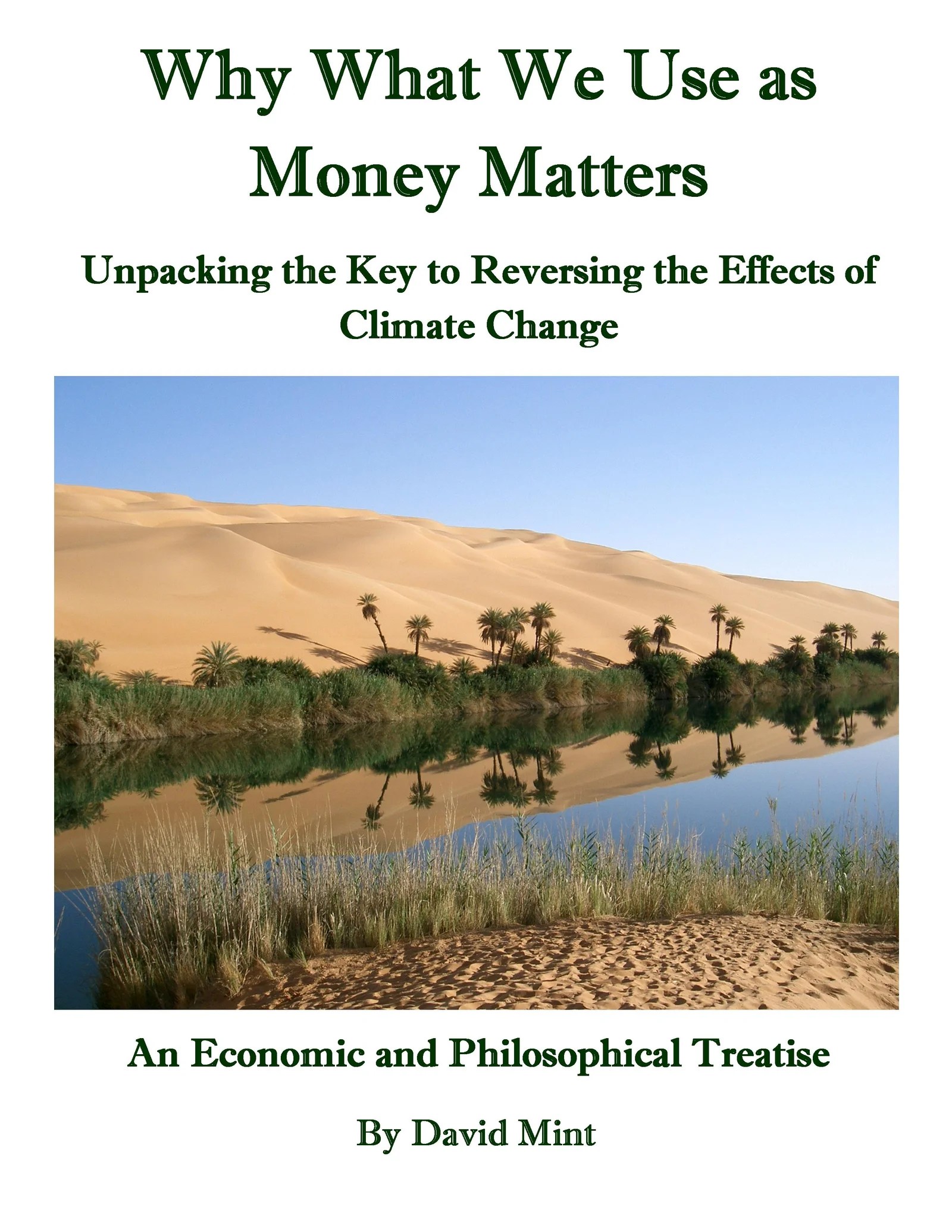
Why What We Use as Money Matters, Our Economic and Philosophical Treatise, is Now Available

Our long awaited Treatise on Economy and Philosophy, Why What We Use as Money Matters, is now available in various digital formats at Smashwords.com and on Kindle at Amazon.com.  With any luck, we will have a print version available before we leave for the Southern Hemisphere.

Why What We Use as Money MattersWhat kind of book is this?  It is largely up to the reader to decide.  For us, it is the fruit of two years of wrestling with some of life’s deeper questions with regards to Economics, Politics, and Philosophy.  It has answered many of them and, in turn, has raised other issues, for in our exploration, as you will see, the current state of affairs is laid bare for all to examine, and our recommended courses of action may be unpalatable for many.

Nevertheless, there it is, altogether thick and challenging, yet refreshingly simple, the key to reversing the effects of climate change.Why What We Use as Money Matters

In a sense, it culminates the first phase of what we set out to do here at The Mint.  There will be more to come, but for the time being, we leave you to ponder the following brief excerpt:

“The natural world strives daily to achieve a perfect state of balance. Events and occurrences that, taken by themselves, appear chaotic and devoid of meaning are together part of a constant rebalancing of the earth’s delicate state. Each event is a splash of color across an oppressive gray sky that hints at a rainbow that will soon appear. “


Why Short-Term Interest Rate Management is Harmful to the Economy: The Unseen Funding Dynamic

Ben Bernanke Testimony
Pondering the folly of Short-term interest rate management

7/1/2013 Portland, Oregon – Pop in your mints…

There are days when things are muddled and days when things are so painfully apparent it disturbs us that we did not happen upon it sooner.  Today is one of the latter.

We have been pondering the failure of centralized planning.  While the evidence is clear that centralized planning is a failure, pointing to the reasons why can prove elusive.  The same holds for our working theory that in order for the activities of mankind to be in balance with the natural world, the monetary premium, a concept that is commonly referred to as money, must be affixed to the natural realm.

Today, a revelation regarding the problem with fixing short-term interest rates (or any interest rate for that matter) came upon us which we will share with you now.  We believe that the revelation deals with both the problem of short-term interest rate fixing as well as the larger issue of the placement of the monetary premium, for the two are linked.

The revelation is the following:  Imagine you are a banker who needs to fund a loan.  In order to fund this loan, you would presumably need to have the money available with which to fund it.  This is simple logic, however, in the real world of banking, the decision of whether or not to fund a loan is completely disconnected from the availability of funds, which is primarily determined by the overnight funding markets which, in turn, are completely reliant upon short-term interest rates.

In a world that followed the rules of financial physics, the short-term interest rates would be completely dependent upon the availability of funds in the system.  However, the centralized management of interest rates makes this critical data point, which would otherwise provide a snapshot of the amount of capital in an economic system which is held in liquid form and available for deployment, irrelevant.  The amount of capital available in system can be determined on whim, such is the power of centralized discount rate management.

As such, the ability of the banker to fund the loan is not dependent upon an availability of funds that represents the amount of capital available in the real world, rather, his ability to fund the loan is completely dependent upon the borrower’s ability to pay, the size of the loan, and the structure of the bank’s balance sheet.

The three criteria above are important, as any underwriter will tell you, but the invisible fourth criteria, the true availability of the funds for the loan, what we call the funding dynamic, is completely ignored in the following fashion:

When the short-term interest is managed to be low, as is the case currently, any borrower who has the capacity to pay and has a lending need that fits well with a certain bank’s loan mix is extremely likely to get funded, regardless of whether or not the economics system as a whole has the capital available to fund his or her loan.  When the short-term interest rate is managed to be high, as it was in the early 1980’s in the US, funding any loan, regardless of the ability to pay and fit with then bank’s balance sheet, becomes impossible to fund.

In both cases, both the borrower and the banker are left completely in the dark as to whether or not there exists the necessary capital stock or productive capacity in the economy for the funds to be deployed in the manner that the borrower envisions, for the short-term interest rate signal has been genetically modified to send a common signal to all participants.

Unfortunately, it is a signal that blinds everyone to the facts of the situation.  For many are the hopes, dreams, and ideas of mankind, but it is the funding dynamic which keeps these hopes, dreams, and ideas in harmony with the natural world upon which we all depend.

Right now, we are floating in the clouds, completely disconnected from reality.  The landing caused by the next round of high rates, via a natural rebalancing of accounts or further genetic modification of the short-term rates, will be very hard indeed.

The funding dynamic is so delicate that mankind cannot hope to optimize genetically modification, for when left alone, it is optimized by definition.  Again, by definition, every attempt to modify will bring about sub-optimal results.

As with all complex economic and political systems, dissent is information, and serves to manage the system’s outputs while at the same time increasing the resiliency of the system, making it less susceptible to shocks.

Centralized short-term interest rate management must be abandoned before it is too late, for it is leading the activities of mankind towards a dangerous showdown with the limitations of the natural world.

Stay tuned and Trust Jesus.

Stay Fresh!

David Mint

Email: davidminteconomics@gmail.com

Key Indicators for July 1, 2013

Copper Price per Lb: $3.14
Oil Price per Barrel:  $97.99
Corn Price per Bushel:  $6.55
10 Yr US Treasury Bond:  2.48%
Mt Gox Bitcoin price in US:  $89.74
FED Target Rate:  0.09%  ON AUTOPILOT, THE FED IS DEAD!
Gold Price Per Ounce:  $1,253
MINT Perceived Target Rate*:  0.25%
Unemployment Rate:  7.6%
Inflation Rate (CPI):  0.1%
Dow Jones Industrial Average:  14,975
M1 Monetary Base:  $2,452,200,000,000
M2 Monetary Base:  $10,628,800,000,000

An Intro to Why What We use as Money Matters – The Calling

6/21/2013 Portland, Oregon – Pop in your mints…

A quick peek at the financial markets over the last two days may lead one to think the world is ending.  From what we can tell, investors are attempting to front run what they perceive to be an earlier than anticipated FED exit from its unprecedented support of the Bond market to let it fend for itself.

Lest us be clear, the Federal Reserve will not exit when anyone expects it.  The mere prospect of it, which began to transmit itself through the markets on Wednesday, caused Treasuries to collapse towards normal and overnight lending in China to seize up while leaving equities and commodities as collateral damage.  M1 even managed to collapse again to $2.4 trillion.  These are hardly long-term (or short-term, for that matter) Fed goals.

If Fed history is any guide, it shows that the Fed knows absolutely nothing.  For example, can you predict what GDP or unemployment will be in one, two, or three years?  Neither can the Federal Reserve governors, who are tasked with controlling such matters.  The only difference between the man on the street and a Federal Reserve governor with regard to such matters is that the wild guess of the man on the street is more likely to be accurate than that of the Fed governor, but that is a tale better wound by those more qualified to explain such matters, such as Lee Adler at the Wall Street Examiner.

We are gearing up to publish our Treatise on political economy, Why What We use as Money Matters, before we head out on holiday this year.  It is more than a treatise, it is our calling (more below).

The current plan is to copy-edit and self publish this important work unless we are successful in landing an interested publisher in the interim.  It is urgent that mankind examine what is in their wallet, for it is currently an invisible hand steering mankind towards a myriad of disasters that are either unfolding or about to unfold.  These man-made disasters can be undone, if only a few can grasp what we have to share.

Stay tuned for the release and enjoy the brief introduction below!

Introduction:  The Calling

Owen Meany had a calling.  The hero in John Irving’s 1989 New York Times bestseller A Prayer for Owen Meany which was later loosely adapted to the feature-length film Simon Birch, believed himself to be God’s instrument in an unswerving and often shocking manner.  Owen Meany’s calling was as clear to him as it was confusing, for while he could see the end result, he could not foresee nor fully understand the varied circumstances which guided him to his encounter with destiny.

We believe that, like the fictional Owen Meany, every human being that is alive or has ever lived has a calling, something specific that is to be done in this world that only they and they alone can accomplish.  The task may be ignored, but it cannot be delegated.  It may require the collaboration of many to accomplish, but the burden and drive to complete the task rests with one individual.

If the task does not get done, it does not get done, and the world will be all the worse off for it.  On the other hand, if it is accomplished, all the host of heaven will applaud, for every calling that is recognized and pursued is not simply another task to be completed, it is an indispensable stitch in the fabric of what may be if only all of humanity would accept the call to a higher purpose that, far from being reserved for the exceptional, is the birthright of every human.

The following nine volumes are our calling.  Taken individually, they are a winding exploration of philosophy, monetary theory, economics, dual entry accounting, climate change, and eschatology.  Taken together, they are a treatise on political economy of such gravity and importance that, if fully understood by even one person among a million, will bring the activities of mankind into a perfect balance with nature.

Will that person be you?

Stay tuned and Trust Jesus.

Stay Fresh!

David Mint

Email: davidminteconomics@gmail.com

Key Indicators for June 21, 2013

Copper Price per Lb: $3.10
Oil Price per Barrel:  $93.92
Corn Price per Bushel:  $6.68
10 Yr US Treasury Bond:  2.17%
Mt Gox Bitcoin price in US:  $115.00
FED Target Rate:  0.10%  ON AUTOPILOT, THE FED IS DEAD!
Gold Price Per Ounce:  $1,299 THE GOLD RUSH IS ON HOLD FOR THE SUMMER!
MINT Perceived Target Rate*:  0.25%
Unemployment Rate:  7.6%
Inflation Rate (CPI):  -0.4%
Dow Jones Industrial Average:  14,799
M1 Monetary Base:  $2,432,200,000,000
M2 Monetary Base:  $10,621,100,000,000

The Mint Money Supply Digest for May 28, 2013

5/28/2013 Portland, Oregon – Pop in your mints…

Jimmy Buffet hit the jackpot when he penned a three chord melody back in 1977:

Margaritaville:  Welcome to ‘Margaritaville,’ the most lucrative song ever.

While it is difficult to comprehend the moral implications of the fact that Margaritaville currently holds the throne as the most lucrative song ever, what is not difficult to comprehend is its allure, a laid back, carefree lifestyle tinged with a hint of regret and melancholy made tolerable by the beach and the “frozen concoction that helps me hold on.”

It is a lifestyle whose allure quickly fades to the harshness of its demands.  Beyond the headaches and marked lack of depth in human relations, alcohol sans moderation will inevitably hasten one’s march to the grave.  Indeed, despite the headlines received by the AIDS epidemic, warfare, and famine, it is often an addiction to cheap alcohol and that contributes to shortened lifespans in developing nations.

There is no way around it, alcohol is hard on one’s system.

As alcohol is hard on the human system, cheap money is hard on the real economy, and will eventually be purged.  At the moment, the M1 money supply is collapsing as the increasing doses of cheap credit have an ever decreasing effect on the real world hangover that awaits at the end of this binge.

Expect the Federal Reserve and the Central Banks of the world to fire up the blenders and roll out the kegs, for a drunk economy is the only one they know.

You can watch Buffet perform his three chord pot of gold here: 

How long will the frozen concoction help them hang on?  Probably not too much longer.

Stay tuned and Trust Jesus.

Stay Fresh!

David Mint

Email: davidminteconomics@gmail.com

Key Indicators for May 28, 2013

Copper Price per Lb: $3.30
Oil Price per Barrel:  $95.01
Corn Price per Bushel:  $6.66
10 Yr US Treasury Bond:  2.13%
Mt Gox Bitcoin price in US:  $128.50
FED Target Rate:  0.08%  ON AUTOPILOT, THE FED IS DEAD!
Gold Price Per Ounce:  $1,381 THE GOLD RUSH IS STILL ON!
MINT Perceived Target Rate*:  0.25%
Unemployment Rate:  7.5%
Inflation Rate (CPI):  -0.4%
Dow Jones Industrial Average:  15,409
M1 Monetary Base:  $2,429,700,000,000 ANOTHER MARKED DROP
M2 Monetary Base:  $10,544,600,000,000

The Mint Money Supply Digest for May 20, 2013

5/20/2013 Portland, Oregon – Pop in your mints…

While the rally in equities continues relatively unchecked, the measure of the M1 monetary base has taken a marked dive of roughly 6.2% since last week, leaving it at a level not seen since April 15th (see the current M1 measure below).

For the uninitiated, the M1 money supply is what we call cash on the street, coins and bills.  In other words, what most people consider spending money.

By nature and by the FED’s own admission, money supply data is highly volatile and subject to revision.  Even so, our own observation has been that folks are short on cash.  While this brief drop is not likely to signal a change in the trend, it has certainly caused some unexpected hiccups in dollar land.

Perhaps not coincidentally, precious metals have continued their near term price collapse.  The price of silver, our preferred investment at The Mint, tanked to nearly $20 overnight Sunday.  While the near term price is somewhat irrelevant, it may be indicative of a rush to meet short term debt obligations by holders of precious metals.

Most media reports read much into price movements, as if they mean something about the real economy.  Unfortunately, the real economy is nothing more than a yo-yo at the end of a string of debt obligations.  Until they wind up the yo-yo and let it be, real economic growth (or contraction of that matter), in terms of debt laden USD land, is nothing more than a myth one reads about in text books and in the main stream financial media.

Eventually, the avalanche of FED funds guaranteed as long as their latest QE pledge is in effect will begin to consistently run into real world asset and commodity prices.  It will feel good, but participants are advised to keep their eye on the punch bowl.  Once it is removed, it will be best to swim near the edge of the pool.

The vanilla crisis is hitting some chocolate patches, try to avoid them.

Stay tuned and Trust Jesus.

Stay Fresh!

David Mint

Email: davidminteconomics@gmail.com

Key Indicators for May 20, 2013

Copper Price per Lb: $3.33
Oil Price per Barrel:  $96.71
Corn Price per Bushel:  $6.49
10 Yr US Treasury Bond:  1.97%
Mt Gox Bitcoin price in US:  $119.75
FED Target Rate:  0.11%  ON AUTOPILOT, THE FED IS DEAD!
Gold Price Per Ounce:  $1,395 THE GOLD RUSH IS STILL ON!
MINT Perceived Target Rate*:  0.25%
Unemployment Rate:  7.5%
Inflation Rate (CPI):  -0.4%
Dow Jones Industrial Average:  15,335
M1 Monetary Base:  $2,482,200,000,000 LOTS OF DOUGH ON THE STREET!
M2 Monetary Base:  $10,538,200,000,000

Natural Law and the Theory of Economic System Fluidity now available!

4/26/2013 Portland, Oregon – Pop in your mints…

Natural Law and the Theory of Economic System Fluidity

We are pleased to announce the release of our latest eBook offering, Natural Law and the Theory of Economic System Fluidity.

Natural Law and the Theory of Economic System Fluidity provides the theoretical basis for allowing the strengths of each economic system to peacefully work together to achieve this end and examines both the natural laws which govern economics as well as the moral basis for the existence of the nation state.

It is volume VI of the Why what we use as Money Matters series, and perhaps the most important, for it forms the philosophical core of our thesis.

We are pleased to offer it in PDF format for free here to our fellow taxpayers at The Mint, just click on the following link:

Mint Edition 04252013 – Natural Law and Economic System Fluidity

Additionally, it can be had for a mere $0.99 over at Amazon’s Kindle store and for free in a myriad of other eBook formats over and at Smashwords.com for the next month.  Be sure to use coupon code: WF75E at checkout to receive the discount.  The offer is good until May 25th, 2013.

Thanks again for reading and all the best!

Stay tuned and Trust Jesus.

Stay Fresh!

David Mint

Email: davidminteconomics@gmail.com

Key Indicators for April 26, 2013

Copper Price per Lb: $3.17
Oil Price per Barrel:  $93.00
Corn Price per Bushel:  $6.44
10 Yr US Treasury Bond:  1.66%
Mt Gox Bitcoin price in US:  $138.55
FED Target Rate:  0.13%  ON AUTOPILOT, THE FED IS DEAD!
Gold Price Per Ounce:  $1,462 THE GOLD RUSH IS STILL ON!
MINT Perceived Target Rate*:  0.25%
Unemployment Rate:  7.6%
Inflation Rate (CPI):  -0.2%
Dow Jones Industrial Average:  14,713
M1 Monetary Base:  $2,470,700,000,000 LOTS OF DOUGH ON THE STREET!
M2 Monetary Base:  $10,667,300,000,000

Marx and Rand together in perfect harmony set for release!

4/25/2013 Portland, Oregon – Pop in your mints…

As the financial world continues to turn in an ever inflated manner, we have been diligently working to complete the latest volume of the Why what we use as Money Matters series before the joyous distractions of summer in the Northwest call us away.

The following is an excerpt of Volume VI in the series, entitled Natural Law and the Theory of Economic System Fluidityis perhaps the most important volume because it forms the ideological core of our economic treatise.

Enjoy and stay fresh!

Marx and Rand together in perfect harmony

It is increasingly important that mankind take adequate time to pause and reflect as to what ideology is being tacitly or actively pursued as a guide for his daily toils.  As the collective efforts of mankind reach an effectiveness that was unimaginable a generation ago, the throws of human action are having a profound impact not only on an increasingly interconnected global economy, but on the very earth which mankind has been entrusted with.

Natural Law and the Theory of Economic System Fluidity

It is no longer a safe assumption that the natural world can perpetually work to correct the mistakes in favor of mankind.  A deep examination of our motives in light of the Golden Rule is desperately needed to ensure a prosperous future for many.  The key to material prosperity is allowing mankind to tacitly coordinate his varied productive efforts by promoting the ideals of true capitalism in large scale dealings, for it is the ideology which best allows mankind to respond to the incessant demands of natural law. Continue reading Marx and Rand together in perfect harmony set for release!

A Tale of Two Responses to Anarchy

4/22/2013 Portland, Oregon – Pop in your mints…

The world keeps turning and has become quite unpredictable.  Check that, it has always been unpredictable, the realization of one’s inability to predict what will happen comes with age.

On one hand, money supply measures around the globe are going through the roof, as is indebtedness.  On the other had, the underlying economy, which had barely picked itself off of the canvas, appears to be up again, ready to be pile driven once again.  What is one to make of it?

The Bitcoin is once again racing ahead in USD terms, while Gold and Silver peel themselves off of the pavement after encountering a steamroller in their path (as an aside, it will be interesting just how much $1,350 gold and $23.50 silver can be delivered, our guess is, not much.)

Karl Marx
Will Karl Marx dance with Rand?

Our upcoming eBook, Natural Law and Economic System Fluidity – Marx and Rand together in perfect harmony, wrestles with unexplained economic phenomena such as the seeming impossibly of Capitalism and Socialism coexisting in harmony with one another, which are rapidly becoming important.

The following is a brief excerpt of our latest offering, scheduled to release late this month.  Enjoy!

A Tale of Two Responses to Anarchy

In the current economic debate that rages between the productive virtues of what is referred to as Capitalism and the humanistic virtues of the Socialist ideal, it has become fashionable to assume that the virtues of one system, were its guiding principles put into action at once by all of the members of society, would eventually bring about the virtues promised by the other system in a peaceful manner.

This narrow, apologetic view taken by Capitalists and Socialists alike ignores the fact that the systems are wholly incompatible.  It also ignores the fact that mankind is in a constant struggle to bring order to surroundings that are inherently anarchic in nature.  The only laws that must be adhered to are natural laws, which are explored in section II of this volume.

For purists on either side of the ideological fence, compromise on any point is a slippery slope, and in the sense that the two systems are wholly incompatible, the view is technically correct.  However, most economists miss the fact that it is perfectly normal and beneficial for each system to operate side by side.  In fact, it is the only way in which mankind can reap the benefits of both systems at once.

All humans live and operate in both systems to some extent.  The Capitalistic system is best equipped to organize resources on a grand scale and provide material goods for the greatest number of people, the Socialist system is the system that offers refuge from the rigid and unrelenting demands of the Capitalistic system’s incessant response to anarchy and the demands of natural law.

This refuge is commonly referred to as the family, and it can be observed operating the world over in all shapes and sizes.

The inescapable fact that Capitalism and Socialism are at once incompatible and completely reliant upon one another is the basis for the Theory of Economic System Fluidity.

More to come as we hack and slash our way through the draft.

Stay tuned and Trust Jesus.

Stay Fresh!

David Mint

Email: davidminteconomics@gmail.com

Key Indicators for April 22, 2013

Copper Price per Lb: $3.14
Oil Price per Barrel:  $89.36
Corn Price per Bushel:  $6.46
10 Yr US Treasury Bond:  1.70%
Mt Gox Bitcoin price in US:  $126.75
FED Target Rate:  0.15%  ON AUTOPILOT, THE FED IS DEAD!
Gold Price Per Ounce:  $1,424 THE GOLD RUSH IS STILL ON!
MINT Perceived Target Rate*:  0.25%
Unemployment Rate:  7.6%
Inflation Rate (CPI):  -0.2%
Dow Jones Industrial Average:  14,567
M1 Monetary Base:  $2,437,900,000,000 LOTS OF DOUGH ON THE STREET!
M2 Monetary Base:  $10,645,600,000,000

The Difficulty of Bitcoin Denominated Debt

4/8/2013 Portland, Oregon – Pop in your mints…

The following is an excerpt of our brief, hastily compiled yet infinitely useful practical guide to the evolving world of Bitcoins.  It is an encouragement to dive into Bitcoin acceptance, a monetary analysis of the Bitcion, a high level how to guide, and a word of caution all with a lesson in character embedded within its pages.

With any luck, it will hit digital shelves before the Bitcoin hits $200 USD, which will be tomorrow.  Enjoy!

The Difficulty of Bitcoin Denominated Debt

Bitcoins:  What they are and how to use them
Bitcoins: What they are and how to use them

Another rare but often unrecognized barrier to Bitcoin acceptance is the inability for the widespread formation of debt markets denominated in terms of Bitcoins.  The reason that debt contracts will not be created in terms of Bitcoins has to do with the very thing that makes Bitcoins valuable in the first place:  The mathematical limit on their issuance.

As of this writing, slightly over half of the 21 million Bitcoins scheduled to be created are in circulation.  The rest will be emitted in decreasing increments over the next twenty years.  The trajectory of the Bitcoin logarithm against the national currencies is negative, which is causing the inverse relationship in their prices.

Again, in layman’s terms, it would be a fools bet to take promise to pay a debt in Bitcoins, as they will, by definition, become increasingly difficult to obtain.  If anything, one would need to factor in a Bitcoin appreciation to the debt instrument, meaning that it would have in implied negative interest rate.  While we can foresee the emergence of such instruments, we also foresee that they will be too complex to be understood by most.  As such, an important medium of currency acceptance, the existence of deep and liquid debt markets, will be lacking in the case of Bitcoin.  While this is not a bad thing, it must be recognized by anyone who deals in Bitcoins.

The book will hit digital shelves near you shortly.

Stay tuned and Trust Jesus.

Stay Fresh!

David Mint

Email: davidminteconomics@gmail.com

Key Indicators for April 8, 2013

Copper Price per Lb: $3.38
Oil Price per Barrel:  $93.40
Corn Price per Bushel:  $6.33
10 Yr US Treasury Bond:  1.73%
Mt Gox Bitcoin price in US:  $186.90
FED Target Rate:  0.14%  ON AUTOPILOT, THE FED IS DEAD!
Gold Price Per Ounce:  $1,571 THE GOLD RUSH IS STILL ON!
MINT Perceived Target Rate*:  0.25%
Unemployment Rate:  7.6%
Inflation Rate (CPI):  0.7%
Dow Jones Industrial Average:  14,613
M1 Monetary Base:  $2,534,800,000,000 LOTS OF DOUGH ON THE STREET!
M2 Monetary Base:  $10,501,300,000,000

Jobs, Gold, and Bitcoins

4/5/2013 Portland, Oregon – Pop in your mints…

Today’s BLS jobs report was seen as an unmitigated disaster.  This should give the Federal Reserve the cover they need to turn Japanese with regards to their QE program (the BOJ came out with a QE program that is roughly 30%! of GDP over a year, by way of comparison, the FED has pumped out 15% of GDP in 5 years).

Bitcoins, gold, and silver jumped.  The management of what the world calls currencies is heading for the exits, and from the looks of things, so are many Dollar, Yen, and Euro holders.

Don’t bother to turn off the light or lock the doors, just get the heck out.  A four alarm fire coupled with an earthquake is on the verge of breaking out in the currency markets.  The monetary premium is looking for something to affix itself to, and it will trample many an asset class in search of it.

Stay tuned and Trust Jesus.

Stay Fresh!

David Mint

Email: davidminteconomics@gmail.com

Key Indicators for April 5, 2013

Copper Price per Lb: $3.38
Oil Price per Barrel:  $92.70
Corn Price per Bushel:  $6.29
10 Yr US Treasury Bond:  1.69%
Mt Gox Bitcoin price in US:  $142.88
FED Target Rate:  0.14%  ON AUTOPILOT, THE FED IS DEAD!
Gold Price Per Ounce:  $1,582 THE GOLD RUSH IS STILL ON!
MINT Perceived Target Rate*:  0.25%
Unemployment Rate:  7.6%
Inflation Rate (CPI):  0.7%
Dow Jones Industrial Average:  14,565
M1 Monetary Base:  $2,534,800,000,000 LOTS OF DOUGH ON THE STREET!
M2 Monetary Base:  $10,501,300,000,000


Government spending, Health Care reform, and the Fair share

4/4/2013 Portland, Oregon – Pop in your mints…

We were fortunate, or not, depending upon one’s view of mainstream economics, to attend the annual Economic Breakfast put on by US Bank.  The annual address is attended by roughly 1,000 and has been given for as long as we can remember by one John Mitchell.

Mr. Mitchell is the retired head economist for US Bank, and today pledged to give the address next year should he be “alive and taking nourishment.”  For his sake, we pray that he will be.  His talks are heavy on data, observations, and are concluded with a poem, yes, a poem which sums up his talk.  Between Mitchell’s wit and the English breakfast, it is time well spent.

Mitchell was interesting as always.  He interjected speculations that the health care reform, which is set to turn the health care industry on its head, and take a few others with it, will have some “unintended consequences.”

First, he speculated that there may be an emergence of 49 person firms to duck the 50 employee threshold at which a slew of obligations are heaped on the employers.  He also speculated that health insurance rates for the young would skyrocket, as rates for the aged in the population are legally bound to be no more than three times the younger persons’ premiums.  Finally, he speculated that in response to the premium jumps experienced by the young and healthy, they would increasingly forgo paying health insurance and pay the famous $95 fine, which has been vehemently haggled in court, and then pick up insurance should they become ill, which of course will be their right under the health care reform.

The point that people will get creative is well taken.

He also made a couple of interesting points about the current recovery.  Both related to government spending.  First, he observed that this is the first recovery that has not seen an increase in government employment.  Second, he presented a graph which mapped the trajectory of Federal spending from 2014 through 2023.  It revealed how both interest payments and mandatory spending would begin to crowd out the part that everyone bickers about, discretionary spending.

Federal discretionary spending is where much of direct government employment flows from.  Mitchell also observed that the spending sequester that was phased in on March 1 was simply a warm up, implying that the Federal government was entering a period of permanent sequestration.

In other words, the Federal government’s days of stimulating the economy in any meaningful way are done, unless a wide scale armed conflict give cause to throw fiscal caution to the wind, an outcome we expect but pray does not occur.

Near the conclusion of his remarks, Mitchell provided an appropriate anecdote for the fiscal situation in the United States via two metaphors.  The first is the meteor, which he presented this way:  Imagine that tomorrow we receive news that a meteor will strike the earth causing catastrophic damage in exactly 15 years.  Further imagine that there is a chance to avert the disaster if all of the resources in the country were to be organized focused on the sole task of building a shield that could withstand the blast.  The only catch is that work must start immediately to be completed by the time the meteor arrives.

Would Congress be able to act fast enough?  Such is the Fiscal state of the US Government.  The entitlement and interest burdens must be dealt with, but the government must start immediately.

We wouldn’t hold our breath.

In Mitchell’s second metaphor, he sums up the government’s current response by reminding us that there is “no fiscal tooth fairy.”

Here at The Mint, we see two outcomes, both equally disturbing.  First, the Federal Reserve has been left to print the US out of the fiscal bind that it is in.  Even if inflation rears its ugly head, don’t expect the Fed to be on top of it.  Plan accordingly and muster real world goods while there is time to do so.

Second, there will be more talk of American’s contributing their “fair share” to the nation’s finances.  The fair share, is the kind and gentle collectivist way for saying “we have run out of money so we are taking yours by force of law.”

The situation in Cyprus has shown that the governments will choose what the “fair share” at their pleasure, and the rush into Bitcoins has shown that people will increasingly shift their material wealth so that tit will not be on the radar when the government moves to collect its “fair share.”

{Editor’s Note:  Beyond Bitcoins, it appears that the fleecing of depositors in Cyprus has given rise to another stream of revenue that banks can offer their customers:  Private deposit insurance.  Who says the government cannot stimulate the economy?}

There are numerous problems with the concept of the “fair share,” but at its base, when a government, or any entity reverts to this type of rhetoric, it seats itself as judge, jury, and jailer when it comes to everyone’s finances.  However, the brutal irony is that the very fact that it must ask and determine what is everyone’s “fair share” should be means that it has fundamentally failed in its stated mission.

To serve its population.

We leave you to ponder this and Mr. Mitchell’s illuminating speech with a word of warning.  Anyone claims that they can accurately determine what exactly everyone’s “fair share” should be must be summarily dismissed.  For we can assure you of this:

That person is wrong, and likely a sociopath.

Stay tuned and Trust Jesus.

Stay Fresh!

David Mint

Email: davidminteconomics@gmail.com

Key Indicators for April 4, 2013

Copper Price per Lb: $3.38
Oil Price per Barrel:  $93.42
Corn Price per Bushel:  $6.30
10 Yr US Treasury Bond:  1.76%
Mt Gox Bitcoin price in US:  $132.00
FED Target Rate:  0.14%  ON AUTOPILOT, THE FED IS DEAD!
Gold Price Per Ounce:  $1,553 THE GOLD RUSH IS STILL ON!
MINT Perceived Target Rate*:  0.25%
Unemployment Rate:  7.7%
Inflation Rate (CPI):  0.7%
Dow Jones Industrial Average:  14,606
M1 Monetary Base:  $2,534,800,000,000 LOTS OF DOUGH ON THE STREET!
M2 Monetary Base:  $10,501,300,000,000

Why the monetary premium must be attributed to a tangible good – To Build up the Land – Part IV

4/1/2013 Portland, Oregon – Pop in your mints…

On this April fool’s day we will attempt to lay out yet another premise.  It is the underlying premise and our ultimate contribution to man’s understanding of monetary theory.

Our choice to present the premise today may mean one of three things:

1.  If it is so absurd as not to be accepted by any thinking human being, we may attribute it to a cruel April fool’s joke.

2.  It may be received as such a revelation that mankind will take what they have assumed to be money for a cruel April fool’s joke.

3.  It just happens to be April 1st as we are writing.

We can assure you of that the third reason is absolutely true, as for which of the first two may be valid, we leave the decision up to you, fellow taxpayer.

The premise is the following:  The monetary premium, which is the increase in the value of an object owed to its usefulness as a store of value, medium of exchange, and/or unit of account, must be primarily attached to a tangible good for the activities which mankind carries out to be in balance with the resources that exist in natural world.

The world has operated on a system of fiat currency, or currency by decree, on and off for as long as there has been an Empire capable of dictating what its subjects must use as money in settlement of debts.  Fiat currency is not harmful in and of itself.  In fact, given enough time, any fiat currency which is not flexible enough to change with the needs of the economic activity which it is intended to aid will either self destruct on its own, owed to it being eschewed in favor of a more suitable currency, or, if its use is rigidly enforced, cause the underlying economic activity to self destruct or cease, causing another form of fiat collapse.

To control what is used as money and the monetary premium represents the ultimate power in the material world.  As such, such control can never be gained by force.  Rather, it must be created by a great many deceptions which cause otherwise rational persons to hand over control over this most important of decisions.

For over 40 years now, much of the world has not only subjugated itself to accepting a form of fiat, it has come to accept as money the worst form of fiat, a fiat currency that comes into being as a debt instrument.  As a result, mankind has attached this precious monetary premium to credit, which is not dependant upon the production of goods in the real world, nor on existing property, rather, it is primarily dependent upon the character of a man.

Today we read a list of quotations compiled by Frederick Sheehan which came to us via Credit Writedowns.  Two of the quotes speak directly to the nature of credit, which will help to underscore our premise:

“Credit is not money.  Credit is trust. Trust can vanish in an instant.” – Frederick J. Sheehan, March 25, 2013

In response to questioning by Samuel Untermeyer during the Pujo Committee hearings, J.P. Morgan famously made the following observations on money and credit:  {Editor’s note: You may read the Pujo Committee, formally known as the Money Trust Investigation, testimonies here via the St. Louis Fed.

Untermyer: ‘The basis of banking is credit, is it not?”

Morgan:  “Not always. That is evidence of banking, but it is not the money itself.  Money is gold, and nothing else.”

Then, during the same lime of testimony:

Untermyer: “Is not commercial credit based primarily on money or property?

Morgan: “No sir, the first thing is character.

Untermyer: “Before money or property?

Morgan: “Before money or property or anything else.  Money cannot buy it”

Both Sheehan and Morgan’s observations on credit are sufficient to gain an understanding of what credit really is.  Most persons are conditioned to assume that credit is backed by collateral.  However, were credit backed by collateral, it would cease to be credit.

The essence of credit is trust.  Trust, by definition, is created by the belief in an inherently uncertain future outcome.  Again, by definition, trust may not always be well placed.  The plans upon which the credit and underlying trust are built may just as well not turn out as planned.

Money cannot be destroyed, it can only change hands.  Credit and trust, however, can be destroyed in an instant, for they are subject to the fickle decisions and imperfect plans of men.

When money is based on trust, the world moves to a very dangerous place with regards to the planning of daily activities.  This is where the world is today, circa 2013, after 40 years of what we refer to as the insane debt is money financial system.

Trust is good and necessary to a point, however, it can vanish in an instant.  When there is an excess amount of trust, or promises to pay, circulating in relationship to a finite number of money, goods, and capital in the real world, there are bound to be a few broken promises.

If kept to a minimum, the economic systems which are organically created by man to trade and deal with scarcity, a state of being that we call True Capitalism, will correct the errors that result from misplaced trust which manifests itself by credits which are defaulted on.  The activities of men will then return to balance with the underlying natural resources which the earth affords him.

Forest Clearing in Cameroon, and example of man's imbalance with nature? Photo credits:  © Greenpeace / Alex Yallop
Forest Clearing in Cameroon, and example of man’s imbalance with nature?
Photo credits: © Greenpeace / Alex Yallop

However, if misplaced trust in the form of bad credits are allowed to perpetuate themselves, men will have no incentive to investigate whom amongst them is worthily of the trust that credit represents.  This state of being will, and indeed does, cause much of the earth’s natural resources to fall into unproductive hands where it will ultimately be squandered.

Meanwhile, those who are capable will not be able to coordinate their efforts with their fellow men in any meaningful way.  Indeed, the capable ones will simply learn how to take advantage of the over abundance of trust which is being created in the world.

This proliferation and misallocation, if we can call it that, of trust has two real world consequences:

1.  Natural resources are wasted at an alarming rate.  For this reason we believe that the placement of the monetary premium on credits has lead to the crisis that most people have come to call “Climate Change.”  It was previously known as “Global warming.”  This represents a myriad of symptoms whose root cause is that man’s activities are severely out of balance.  The cause of this imbalance in the current situation is that man’s activities, both those worth of trust that have succeeded and those that have failed miserably, have been greatly accelerated by the dangerous mix of credit and the monetary premium that circulates as currency.

Man is in a desperate race to meet a timetable that the earth’s resources cannot provide for.  The result is the severe imbalances which we are now observing.  It is this, and not the industrial revolution, fossil fuels, or any of the other symptoms that is the root cause of climate change.

2.  While there are a great deal of men who are busy scorching the earth with their activities, the wise have learned to concentrate their efforts not on the productive activities to which they would otherwise dedicate themselves, but to profiting from the explosion of trust and credit, from the misjudgments and miscalculations or their fellow men.

The land is either laying fallow or being scorched by the misguided activities of men, rather than being built up, as Old Jules encouraged.

However, it is not man himself or any of his inventions which constitute the root cause of the problem.  Rather, it is the simple misplacement of the monetary premium on credit instruments which emits the false signals that we all either follow or are forced to follow in the planning and execution of our daily activities.

This is our premise.  If one man in a million will grasp it, we can change the world.  Will it be you?

Stay tuned and Trust Jesus.

Stay Fresh!

David Mint

Email: davidminteconomics@gmail.com

Key Indicators for April 1, 2013

Copper Price per Lb: $3.40
Oil Price per Barrel:  $97.07
Corn Price per Bushel:  $6.42
10 Yr US Treasury Bond:  1.84%
FED Target Rate:  0.13%  ON AUTOPILOT, THE FED IS DEAD!
Gold Price Per Ounce:  $1,599 THE GOLD RUSH IS STILL ON!
MINT Perceived Target Rate*:  0.25%
Unemployment Rate:  7.7%
Inflation Rate (CPI):  0.7%
Dow Jones Industrial Average:  14,573
M1 Monetary Base:  $2,425,000,000,000 LOTS OF DOUGH ON THE STREET!
M2 Monetary Base:  $10,547,600,000,000

The Presumption of a Monetary Constant

3/26/2013 Portland, Oregon – Pop in your mints…

Today, we offer a second course on the menu of our upcoming eBook release, Pacioli’s Gift vs. Bernanke’s Curse, it is a chapter on the importance of a monetary constant when employing the methods of dual entry accounting.  Enjoy!

The Presumption of a Monetary Constant

Luca Pacioli was first and foremost a mathematician.  He understood that mathematics relies upon certain constants to remain, well, constant in order for the calculations that depended upon them to be meaningful.  Whether or not Pacioli was conscious of the fact, implicit in his presentation of the methods of dual entry accounting is the assumption that the money in which he was directing merchants to keep their accounts on the basis of was sound money.  The use of the monetary unit as a unit of account implies that he understood that money was to the economic world what constants were to mathematical calculations.

Also implicit in his assumption was that the monetary units which were to be used as units of account on the accounting ledger contained a constant weight of silver or gold which existed in the natural world.  Silver and gold that had been hewn out of the ground and struck into coinage of a set weight and metallic alloy by the men at the old Zecca, the Mint of Venice in the Rialto district which preceded its famous successor was completed in 1545.  This was an important assumption, as dual entry accounting only works when the accounts balance.  By design, it implies that physical goods are in existence or are reasonably expected to come into existence and become available for exchange.

When Pacioli penned Summa, the Venetian Zecca was one of the largest and most reputable mints in the world.  This reputation was born in no small part of a scandal at the Zecca which consummated with the Doges, who ruled Venice at the time issuing a decree on the 11th of November, 1457 against then noted variations in the weight and purity of the gold and silver coins that the Mint at Venice.  As a result of this renewed commitment to monetary purity, the coins which circulated in Pacioli’s time and locale, the Silver Ducat, Soldo, Lira Sequin, and Gold Ducat, served as the standard of trade in the world known to Pacioli.

Given that the Venetian merchants could count on this sound monetary standard on which to base their accounts and, by extension, their choice of activities, their use of dual entry accounting not only benefited their own interests, but had the side effect of benefiting all who circulated and traded the Venetian coinage, whether or not they had mastered the art of dual entry accounting.

Luca_Pacioli_Gemaelde by Jacopo de' Barbari circa 1496
Summa de Arithmetica, Geometrica, Proportioni et Proportionale – Pacioli’s great gift to Western Civilization

For those who had mastered the art of dual entry accounting in this environment, the ability to properly recognize and record their transactions and to make sense of the results gave them a sort of super power.  This super power, the ability to recognize the value of transactions over longer time horizons and therefore direct investments over longer time horizons, was further refined by Pacioli, who employed the use of Arabic numerals and proposed a system of mercantile accounting that could apply uniformly to all trades and nations.

However, dual entry accounting, as mankind is now coming to understand, is a two-edged sword.  For dual entry accounting to work in favor of those who practice and/or rely upon it, the unit of account must hold a stable value.  The assumption of the relatively stable value of the monetary unit in relationship to the natural world is essential for interpreting the primary output of dual entry accounting, the profit or loss signal.  The stable unit of account is also essential when evaluating the worth and employment of items that are represented by entries to the balance sheet, upon which the profit or loss signal ultimately depends.

In short, the stability of the monetary unit of account was essential if dual entry was to be relied upon for sound decision-making.

For the Venetians, this requirement was met by virtue of their relatively stable monetary unit.  As such, the Venetian Mercantile class rose to dominate the Western world.  Indeed, with few notable exceptions, dual entry accounting has rendered an invaluable service to mankind and has allowed human progress to follow a generally upward trajectory in terms of material well-being ever since Pacioli made his bequeath to mankind.

As a stable currency enables the super powers of dual entry accounting to operate, an unstable currency, of which there are numerous examples in the largest economies in the world today, circa 2013, is its kryptonite.  A currency that does not have a relatively stable value over long time horizons, specifically the time horizons required for large-scale investments of capital to be planned with the precision required for them to be successful, serves to render the gift of Pacioli powerless.

In doing so, an unstable currency threatens to take mankind from the comfort of their large screen televisions, sofas, and smart phones, and throw them back into the dark ages, from which the world that Pacioli lived in had recently emerged.

In the irony of ironies, mankind has unwittingly made use of Pacioli’s gift to create the largest system of unstable currency that the world has ever known, the one that has operated for the past 100 years.  This disastrous invention is known as central banking, and it has quickly turned the world’s economy into an unmitigated catastrophe waiting to happen.

Stay tuned for the release and Trust Jesus.

Stay Fresh!

David Mint

Email: davidminteconomics@gmail.com

Key Indicators for March 26, 2013

Copper Price per Lb: $3.45
Oil Price per Barrel:  $96.17
Corn Price per Bushel:  $7.30
10 Yr US Treasury Bond:  1.91%
FED Target Rate:  0.15%  ON AUTOPILOT, THE FED IS DEAD!
Gold Price Per Ounce:  $1,600 THE GOLD RUSH IS STILL ON!
MINT Perceived Target Rate*:  0.25%
Unemployment Rate:  7.7%
Inflation Rate (CPI):  0.7%
Dow Jones Industrial Average:  14,560
M1 Monetary Base:  $2,368,600,000,000 LOTS OF DOUGH ON THE STREET!
M2 Monetary Base:  $10,521,800,000,000

Pacioli’s Gift vs. Bernanke’s Curse

3/25/2013 Portland, Oregon – Pop in your mints…

As events in the Cyrus experiment continue to unfold.  here at The Mint we are watching from a distance, aghast at the implications.  The sacred rule of the Financial Crisis, the one that shielded most banking clients from taking direct losses as a result of holding their funds in a weak bank in a sovereign nation without the means or the control over its currency to bail them out, has been broken.

Anyone who was unfortunate enough to be holding over 100,000 Euros in a Cypriot bank at the close of business on March 15, 2013, now stands to take a 40% bath on all “uninsured funds.”

This is a warning shot, and if you are reading these words and do not yet understand, let us spell it out loud and clear.  Funds held in banks or financial institutions are sitting ducks for bankrupt governments to line their pockets with.  Any wealth that one wishes to maintain must be kept close at hand in something tangible and trade-able.  Bank accounts are no longer risk free assets.  They never were.

How has the world come to this place, where a government would directly confiscate assets and assume that there would not be severe repercussions?

Luca_Pacioli_Gemaelde by Jacopo de' Barbari circa 1496
Summa de Arithmetica, Geometrica, Proportioni et Proportionale – Pacioli’s great gift to Western Civilization

We have been editing our latest e-book, which will hit digital shelves later this week if all goes well.  It is volume V in our “Why what we use as Money Matters” series.  In it we explore how humanity came to this point in history, what is wrong, and most importantly, the solution.

As an appetizer, we present to you the introduction.  Enjoy!

Pacioli’s Gift vs. Bernanke’s Curse

An Introduction

In response to what has become known as the Financial Crisis of 2008, the Central Bankers of the world have employed nearly every form of monetary alchemy at their disposal in a desperate attempt to maintain the status quo.  The status quo, which in this case means that all commercial banks and sovereign governments remain both liquid and solvent, has become increasingly difficult to maintain as each attempt to stimulate economic growth via ultra low discount rates and quantitative easing has seen a diminishing marginal return in terms of economic growth.  The longer the Central Banks of the world engage in these and other forms of financial alchemy, which in the end serve as futile attempts to defy immutable natural laws, the greater the danger of a complete economic collapse becomes.

The unconventional measures employed by the World’s Central bankers in increasing measures over the past five years are not only failing to achieve their stated goals of increasing employment and economic growth, they are triggering what is quickly becoming an unmitigated disaster in the fixed income markets.  These markets, once the bedrock of global finance, have now been conditioned to do nothing more than attempt to front run the FED and other Central Banks up and down the yield curve.

The action in the financial markets is akin to a 300 pound man, who represents the Central Banks, chasing an 800 pound gorilla, who represents the financial markets, around on a queen sized water bed.  The action is becoming completely unpredictable and downright dangerous.  Throw in the chaotic interventions of a 10 pound chihuahua, who represents the sovereign governments’ meddling in the market financial market mechanisms via commercial banking regulation and tax policy, and the entire situation is a basement flood waiting to happen.

As the chaos on the water bed, which is a metaphor for the wealth of the real world, continues to unfold, it is important to examine and understand, to the extent possible, how humanity has arrived at this critical juncture in history, where a fat man chasing a gorilla while dancing around a chihuahua on a water bed can threaten to damage the wealth of nearly everyone on the planet.

It is the aim of this volume to explore two of the oft overlooked elements that have, each in their own way, given rise to the system which enables a relatively small group of persons to the ability to destroy the accumulated wealth of mankind’s 9,000 years of toil in just over 100.  Dual entry accounting, which we refer to as mankind’s greatest invention, and Central Banking, which we refer to as mankind’s greatest catastrophe.

In the end, we present what is known as “Free Banking” as the antidote for the curse of Central Banking, and the ultimate solution to the current and future financial crises that the world will suffer at the hands of well-meaning Central bankers who, it would appear, are oblivious to the destruction that their chosen profession inflicts on humanity.

Intrigued?  So are we.  Stay tuned and Trust Jesus.

Stay Fresh!

David Mint

Email: davidminteconomics@gmail.com

Key Indicators for March 25, 2013

Copper Price per Lb: $3.44
Oil Price per Barrel:  $94.75
Corn Price per Bushel:  $7.33
10 Yr US Treasury Bond:  1.92%
FED Target Rate:  0.16%  ON AUTOPILOT, THE FED IS DEAD!
Gold Price Per Ounce:  $1,605 THE GOLD RUSH IS STILL ON!
MINT Perceived Target Rate*:  0.25%
Unemployment Rate:  7.7%
Inflation Rate (CPI):  0.7%
Dow Jones Industrial Average:  14,448
M1 Monetary Base:  $2,368,600,000,000 LOTS OF DOUGH ON THE STREET!
M2 Monetary Base:  $10,521,800,000,000

I’m Latin, I can’t Keep Calm! Adios Euros

3/21/2013 Portland, Oregon – Pop in your mints…

On Monday, we shared with you our friend Tom’s first hand experience and general impressions with the Spain’s currency conversion from pesetas to the Euro.

Adios Pesetas: A look back at adoption of the Euro in Spain

The conversion to the Euro, for most practical purposes was a long, drawn out process which took two years to implement, starting with the final exchange rate peg to the Euro and culminating with the coin and bill conversion which Tom so eloquently described.

Adios Euros!
Adios Euros!

Today, thanks to the prospect of forced bail ins, the term for a levy or tax (depending upon your preferred term for asset confiscation) such as the one proposed in Cyprus which would bail out the government and/or banks, there is a run on banks throughout Iberia.

The reason is that the preference for the bail in solutions are now popping out of central banker’s mouths like pop corn.  Even Ben Bernanke, slave master of the US currency, has uttered that it would be a possibility.

However, this is the twenty-first century, and bank runs aren’t what they used to be.  For one thing, banks now have instant access to all of the digital currency they could possibly want.  It is a simple ledger entry for the bank to replace the customer’s deposit with a Central Bank liability.

However, there is still the matter of cold, hard currency.  As the Spaniards begin to withdraw currency en masse, the bank branches are bound to run out of Euros.  Thanks to technology, holding Euros, either in physical or digital form, is no longer an absolute necessity and, at this point, it is extremely undesirable.

According to a report at Zerohedge.com, Spaniards are getting a crash course on Bitcoin adoption:  Spain Bitcoin run has started

As the monetary authorities are just now beginning to understand the practical implications o

Bienvenido real money!

f forced bail ins, the peoples of the world are not content to stand pat while their leaders sqauble over how much to confiscate from whom.  Thanks to digital solutions like the Bitcoin, Spaniards and people the world over are making a run on banks from the comfort of their own homes on their smart phones.  The Euro, which took two years to implement, may be largely replaced in commerce in a matter of weeks.

Even so, the Bitcoin has its limits, as wealth held digitally has a flight risk of its own.  Silver and other hard currencies do not have this problem, and the first stages of the next leg up in Silver and Gold is commencing in lockstep with the Bitcoin app downloads in Iberia.  Either way, it is a unanimous democratic process whose end result will be the Euro being voted off the continent.

While the monetary authorities prepare their familiar mantra, “Keep Calm and Carry on,” the response in Iberia is ringing back “I’m Latin, I can’t Keep Calm!”

Neither should you.  Here at The Mint, we have taken the step of accepting Bitcoins in exchange for silver coins to deal with this contingency.  We ship worldwide and guarantee your satisfaction.  If you are interested, please email us at the address below for a quote as we have yet to fully automate this process.

Adios Euros!  Bienvenido real money.

Stay Fresh!

David Mint

Email: davidminteconomics@gmail.com

Key Indicators for March 21, 2013

Copper Price per Lb: $3.47
Oil Price per Barrel: $93.15
Corn Price per Bushel: $7.32
10 Yr US Treasury Bond: 1.94%
FED Target Rate: 0.15% ON AUTOPILOT, THE FED IS DEAD!
Gold Price Per Ounce: $1,614 THE GOLD RUSH IS STILL ON!
MINT Perceived Target Rate*: 0.25%
Unemployment Rate: 7.7%
Inflation Rate (CPI): 0.7%
Dow Jones Industrial Average: 14,512
M1 Monetary Base: $2,466,100,000,000 LOTS OF DOUGH ON THE STREET!
M2 Monetary Base: $10,499,300,000,000

Cyprus – The Waterloo of Eurocratic management or the ultimate catalyst for Euro zone growth?

3/18/2013 Portland, Oregon – Pop in your mints…

While the management of the ongoing banking crises on this side of the Atlantic has been dishonest, the management on the other side of the pond, or in today’s case, sea, has been an unmitigated disaster.  Or so it would seem.

We are talking about Cyprus.  For those who have yet to hear about Cyprus, it is an island nation located in the far eastern Mediterranean Sea, just below Turkey.  It is currently inhabited by a fiery mix of Greeks and Turks, who have lived in an uneasy peace with each other for some 40 years after the events that took place during the summer of 1974.

Like many island nations, Cyprus has been able to find common ground with those who have been unable to find common ground on the mainland.  It has found that it can leverage its sovereignty and willingness to bend the rules to offer banking services without the nagging regulations which increasingly plague banks and their clients in the Western nations on the mainland.

Now that the government of Cyprus is bankrupt and in need of a bailout, showing that even a tax and banking paradise can be poisoned by a bad currency, they have gone hat in hand to Belgium, a strange country in the north with absolutely nothing in common with Cyprus, save the currency in question.

The Eurocratic apparatus in Belgium, either on its own or at the behest of the global banking giants in Cyprus, has decided that the terms of the bailout, or “bail in”, which is the Euro friendly way to say “Corralito,” {Editor’s Note:  Corralito is the Argentinean term for when the Government decides to unilaterally make use of the funds in its country’s banks to fund the government because there is literally no one willing to lend them currency on any terms}, would be the direct confiscation of funds from depositors bank accounts in the form of a tax, in this case between 3 and 9.9% (because 10% just looks bad in print) to ultimately pay back the countries who have been generous enough to provide the funds, which, despite the technicalities involved, for most Europeans means Germany.

Predictably, the people of Cyprus, who caught wind of the confirmation of the rumors on Friday and awoke Monday to find that their government had declared what is, at this writing, an indefinite banking holiday (meaning banks and ATMs are closed) to prevent anyone who did not want to participate in the bail in from withdrawing their funds from the country’s banks, are channeling their anger at the German Embassy, quite naturally:

Henry Blodget has written a decent analysis on the details of the Cyprus bail in over at the Daily Ticker.  Blodget does a good job of analyzing the events up until the point where He presumes:

“…the moment depositors think that there is risk to their savings, they rush to banks to yank their money out.

That’s called a run on the bank.

And since no bank anywhere has enough cash on hand to pay off all its depositors at once, runs on the bank cause banks to go bust.

That’s what happened to hundreds of banks in the Great Depression.

And it’s what happened to Bear Stearns, Lehman Brothers, and other huge banks during the financial crisis (though, with Bear and Lehman, the folks who yanked their money out weren’t mom and pop depositors but other big financial institutions). It’s what threatened to bring the entire U.S. financial system to its knees. And it’s why the U.S. and European governments have been frantically bailing out banks ever since.

But now, thanks to the eurozone’s bizarre decision in Cyprus, the illusion that depositors don’t need to yank their money out of threatened banks because they’ll be protected has been shattered.”

What Blodget presumes is that a bank run is bad for the bank.  Here at The Mint, we postulate that this tax on depositors is taken precisely for the benefit of the Cypriot banks.  Further, it has been taken not only for the benefit of the banks in Cypriot, but to serve as the catalyst for the Euro zone to return to growth, or the activities which pass as economic growth circa 2013.

How can this be?  To understand this will take a basic understanding of the banking revenue model.

Ever since 2008, the Federal Reserve and the ECB have been underwriting the banking sector by providing cheap cash to banks and, indirectly, the governments and people’s of their respective countries.  This is where Blodget’s parallel of today’s bank runs and those that occurred during the Great Depression falls apart.  For all of the mistakes that Ben Bernanke has made, the unconditional guarantee of liquidity in the banking system is the one that he will never relinquish, despite appeals to reason, for he mysteriously sees it as his life’s calling.

However, in an effort to stem the fall in asset prices, which is largely a product of the insane “jack the rate 25 basis points every month or so” policy that the Greenspan and Bernanke Fed followed from June 2004 until June 2006, the policy that caused markets to seize up like a car engine losing oil as they accelerated to record speeds, the Feds and the ECB have largely ignited an increase not in economic growth, but in bank deposits.

Bank deposits, far from being a boon to the receiving bank, are a huge problem when market conditions force them to reinvest (read lend out) those funds for rates that are unconscionably low (3.75% to consumers for 30 years, in a fiat currency system, are you out of your mind?).  Making matters worse, the consumers have been slow to take the bait, resulting in a big time squeeze on the traditional banking revenue model.

Enter Cyprus, an island that holds a disproportionate amount of bank deposits.  As a thinking Eurocrat, of which we suspect there are few, save Nile Farage, who is hunting for a way to both ensure that the banking revenue model continues to function, the government of Cyprus retains legitimacy, and that economic activity in the Euro zone will increase, the pile of Euros in Cypriot banks looks like a great target not to loot, as most analysis of the situation will paint this move as, but to force billions of Euros out of the digital vaults of the banking system to wash from the shores of Cyprus outwards into the other Euro zone countries in search of real goods, not simply another cash warehouse.

One sees the Eurocratic genius in the move at the moment one (again, that is you and I, fellow taxpayer) understands that the mere threat of a unilateral tax on deposits as a condition for a Euro zone bailout is causing lines to form at ATMs from Andalu to Cataluña, across the border into Torino and down to the lonely parts of Sicily.

Cyprus Flag
Will the Cyprus Misadventure by the catalyst for elusive economic growth in the Euro zone?

Within a matter of days, billions of Euros which were locked up in the accounts of villainous savers and otherwise useless to the European economy will be running around the Spanish and Italian streets in a desperate attempt to purchase anything real in which to hold said savings.

With what appears to have been a typically boneheaded Eurocratic move, the Eurocrats may have managed to do what Ben Bernanke and all of the helicopters in the world could not have done to the club Med economies:  Shower them with foolishly spent cash while at the same time bailing out both the banks and the governments as a grotesque side effect.

To be sure, it is a short term fix and will leave the Euro zone further down the scorched earth economy path in a matter of years.  Even so, you have to give the Eurocrats some credit for pulling out all the stops, even if they did stumble upon their ultimate stimulus, which relies upon their own stupidity to function, completely by accident.

Meanwhile in Cyprus, the latest is that the government wants to “think over” the terms of the bailout.  The formal vote has been postponed until Friday, and we presume that the banking holiday will remain in effect until after the vote is taken and any taxes are skimmed.

It is a hard assignment, and we do not envy them nor blame them for thinking it over.  The decision before Cyprus’ government officials is simple.  Should they accept the bailout, they face being blamed by their countrymen for sacrificing their parched island on the Eurocratic altar as well as spending the rest of their lives dodging the hit men of any oligarch’s who did not have sufficient forewarning of the move.

Should they reject the bailout, their government may even find a few contributions from said oligarchs to keep operating, and the only cost will be a few less German tourists on their shores, which, given the alternative, seems a small price to pay.

In the end, if our hunch is correct, the mere threat of corallito should be enough to stimulate the Euro zone.

Were we in their shoes, and we are glad we are not, we would reject the bailout.  Either way, it is a strong argument for exiting the formal banking system or becoming a large net creditor.  It is much easier for “crats” of any stripe to confiscate assets with a few keystrokes than for them to lift a finger to grab something in the real world.

Stay tuned and Trust Jesus.

Stay Fresh!

David Mint

Email: davidminteconomics@gmail.com

Key Indicators for March 18, 2013 (PM)

Copper Price per Lb: $3.43
Oil Price per Barrel:  $93.79
Corn Price per Bushel:  $7.20
10 Yr US Treasury Bond:  1.96%
FED Target Rate:  0.15%  ON AUTOPILOT, THE FED IS DEAD!
Gold Price Per Ounce:  $1,606 THE GOLD RUSH IS STILL ON!
MINT Perceived Target Rate*:  0.25%
Unemployment Rate:  7.7%
Inflation Rate (CPI):  0.7%
Dow Jones Industrial Average:  14,452
M1 Monetary Base:  $2,466,100,000,000 LOTS OF DOUGH ON THE STREET!
M2 Monetary Base:  $10,499,300,000,000